~/application security

Web Security

Most companies’ attack surface is a web application or an API behind one. Web security is therefore one of the highest-leverage skills on the platform, whether you want to test applications, build them more safely, or detect abuse in production traffic.

The problems that keep showing up

Broken access control, injection, session issues, SSRF, file upload flaws, and business-logic gaps still dominate real assessments. Learning them in isolation is less useful than learning how an application’s trust boundaries actually work: who is the user, what should they be able to do, and what happens when that assumption is wrong.

Testing and building share a language

Secure coding, API testing, and web pentesting are neighboring skills. Developers who understand offensive testing write fewer classes of bug. Testers who understand how apps are built waste less time on impossible exploits. CyberA4U keeps those tracks linked on purpose.

Practice in the Arena

Web CTF challenges are a safe place to apply reconnaissance, request manipulation, and source review. They are not a substitute for a scoped professional test, but they train the same attention to detail. Pair them with a web pentesting roadmap and Academy coursework rather than grinding challenges with no notes.

What you will learn

  • How web trust boundaries fail
  • The difference between a scanner finding and a usable exploit path
  • Why APIs and business logic need their own testing habits
  • How web skills transfer into SOC detection for web apps

Related roadmaps

Related CyberA4U courses

In production

Red Team

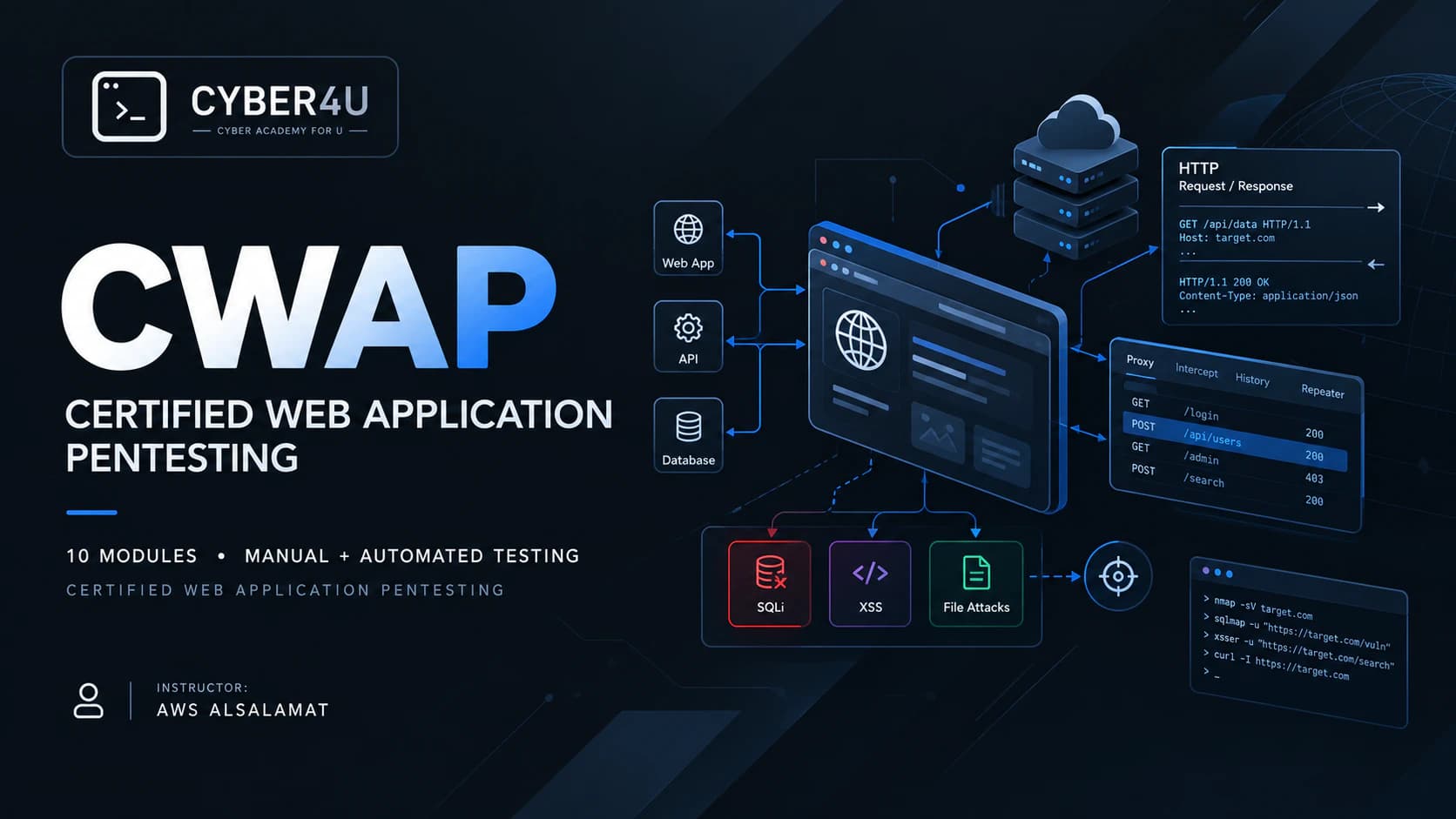
Certified Web Application Pentesting (CWAP)

A hands-on web application penetration testing course covering reconnaissance, Burp Suite, OWASP ZAP, XSS, SQL injection, common web attacks, file attacks, web services, CMS security, and evasion techniques.

  • Beginner
  • 60h

100 JOD

Aws Alsalamat

Frequently asked questions

What is web application security?

Building and testing web applications so that common weaknesses such as those in the OWASP Top 10 (broken access control, injection, misconfiguration and others) are prevented or found early.

Is web security for developers or security teams?

Both. Developers prevent vulnerabilities while writing code; security specialists review, test and help fix them. Understanding HTTP and how web apps work is essential for both.

Where can I practise safely?

Use deliberately vulnerable training applications in your own lab and the challenges in the CTF Arena. Never test websites you do not have permission to test.

Related topics

Continue on CyberA4U