
~/offensive security

Penetration Testing

Penetration testing is a structured assessment, not a random collection of exploits. Clients hire testers to answer a specific question: what can a skilled attacker actually do against this environment, and what should be fixed first? That requires methodology, evidence, and communication as much as technical depth.

Methodology before tools

A professional test has a scope, rules of engagement, and a repeatable workflow: reconnaissance, mapping, vulnerability analysis, controlled exploitation, post-exploitation thinking, and reporting. Tools change. The ability to explain business risk from a technical finding is what makes the work hireable.

Web, network, and internal paths

CyberA4U covers the testing styles teams actually buy. Web and API assessments look at authentication, access control, injection, and business logic. Network and internal tests look at segmentation, identity, and the paths between systems. You can specialize, but the shared foundation is Linux, networking, and careful note-taking.

Reporting is part of the skill

A finding that cannot be reproduced or prioritized is unfinished work. Roadmaps and courses on the platform include report structure, evidence, and the difference between a clever trick and a risk a security team can act on.

What you will learn

  • How a penetration test is scoped and sequenced
  • The difference between scanning and testing
  • Web, network, and internal assessment themes
  • How to turn technical proof into a usable report

Related roadmaps

Related CyberA4U courses

In production

Junior Penetration Tester(eJPTv2) Prep

Master practical penetration testing fundamentals with hands-on labs covering network security, assessment methodologies, host-based attacks, and web application security for the eJPTv2 certification.

  • Beginner
  • 9 lessons

100 JOD

mohammad ayman fakhri majdalawi
In production

Red Team

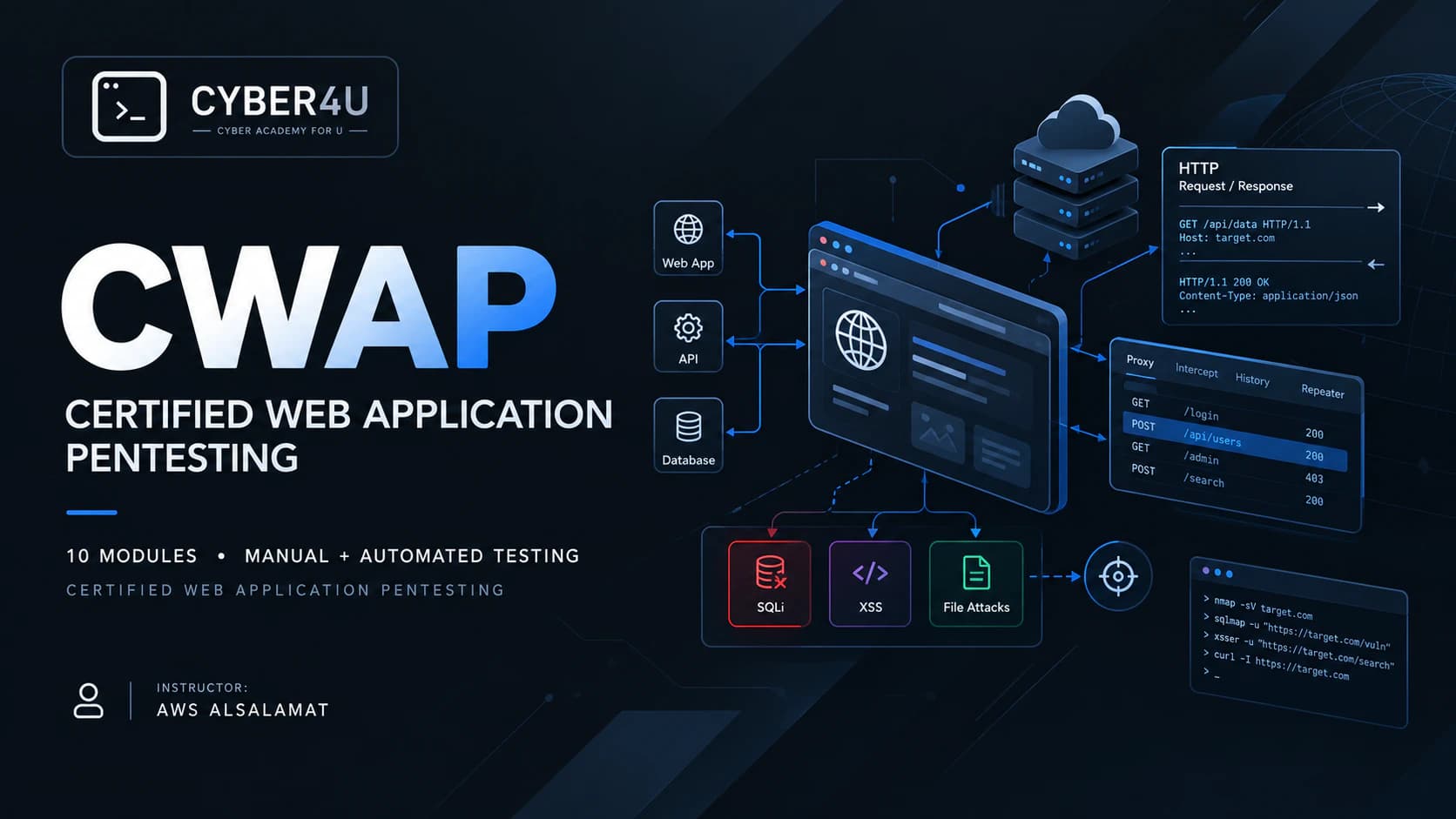
Certified Web Application Pentesting (CWAP)

A hands-on web application penetration testing course covering reconnaissance, Burp Suite, OWASP ZAP, XSS, SQL injection, common web attacks, file attacks, web services, CMS security, and evasion techniques.

  • Beginner
  • 60h

100 JOD

Aws Alsalamat

Frequently asked questions

What does a penetration tester deliver?

A report: what was tested, what was found, how serious each finding is, evidence, and clear remediation advice. Communication matters as much as technical skill.

Which areas does penetration testing cover?

Common engagement types are network, web application, API, cloud, wireless and internal/Active Directory assessments. Most testers start with web and network testing.

How do I get hands-on practice?

Build a home lab, follow a structured roadmap, and solve CTF challenges. Only ever test systems you own or are explicitly authorised to test.

Related topics

Continue on CyberA4U